

Every Saturday morning I walk into yoga and scan my little barcode at the front desk. The happiest man in the universe, maybe it’s all of the exercise endorphins, always greets me with a cheerful, “good morning.” I scan my barcode.
“Good job.”
Cheesy smile.
Good job? I mean... I appreciate the kindness. But I literally scanned a barcode.
The Trophy I Never Earned
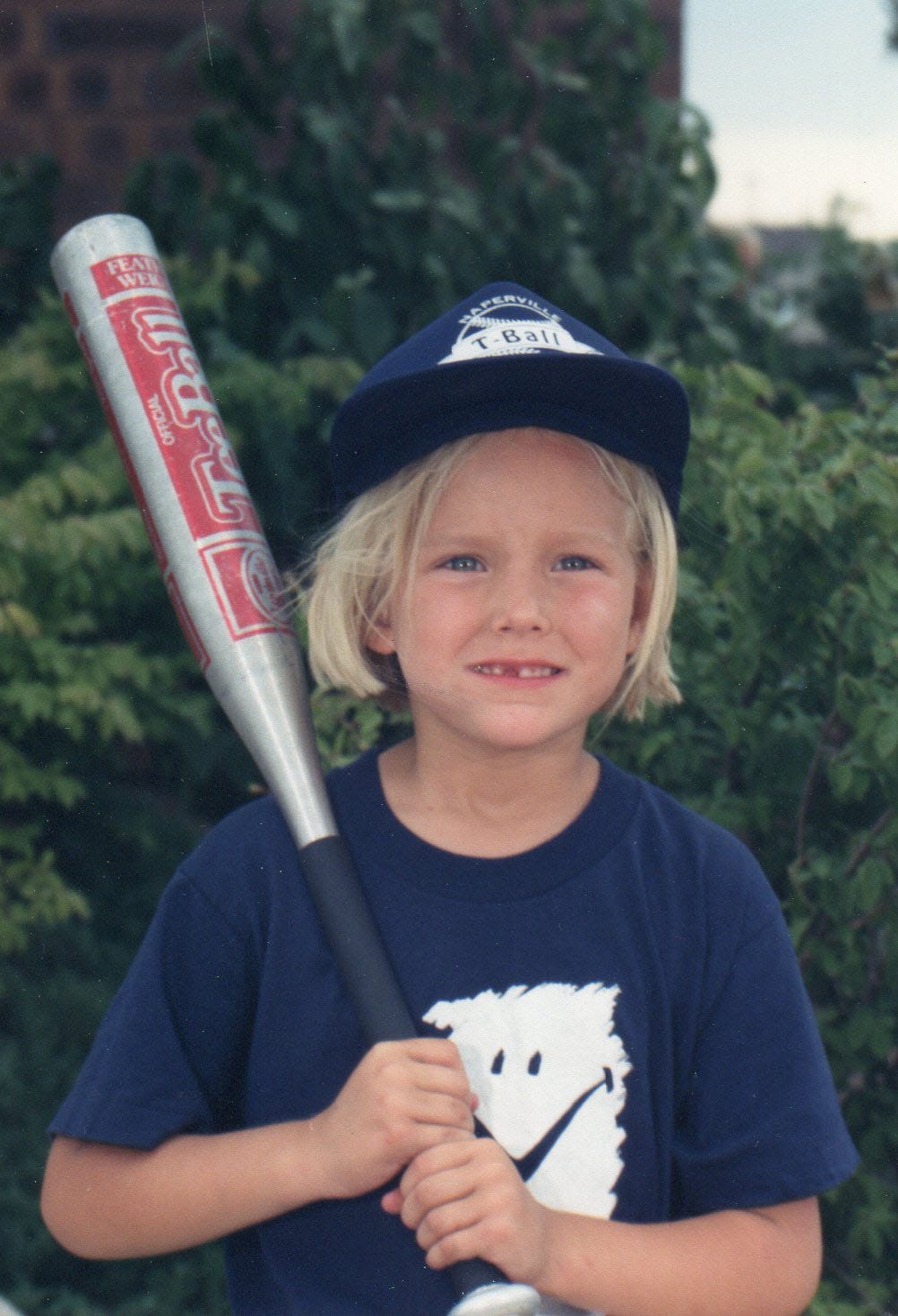
It reminds me of the first trophy I ever got playing the most rigorous of small people sports…T-ball.
Now, there’s a spectrum of little league athletes.
You’ve got the stars. The contributors. The kid pulling dandelions in right field. And then the kid who wanders off the field because a butterfly looked interesting.
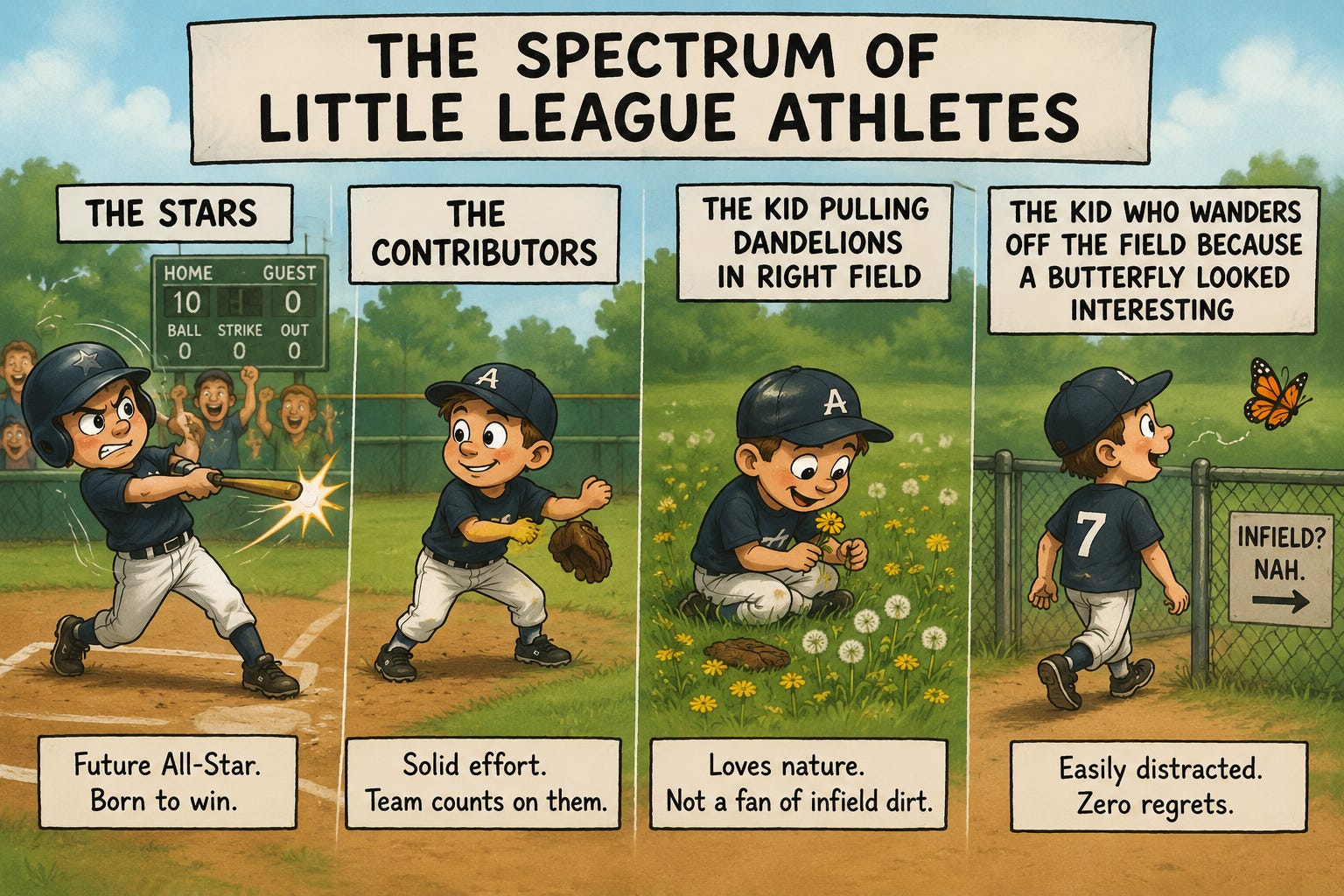
I was the dandelion puller.
At the end of the season, every kid got a trophy.
I remember holding mine and having a thought that I probably wasn’t supposed to have at five years old: I didn’t earn this.
That little plastic trophy sat on a shelf in my bedroom for my entire childhood. My mom would occasionally point toward it while reminding me to clean my room. “This is part of your clutter. Deal with it.”
Every time I looked at it, I felt a small tinge of embarrassment. I knew I wasn’t a good athlete.
I knew the difference between earning something and being handed something.
I didn’t feel encouraged. I felt misunderstood.
Kids Already Know
I don’t think participation trophies are what people think they are. The loudest voices say they created a generation of entitled kids.
I don’t buy it.
Kids aren’t that gullible. They know who scored the goals, who practiced after everyone else went home, and who was pulling dandelions.
Adults think they’re protecting kids’ confidence but kids already know the truth. The trophy doesn’t fool them.
It just teaches them that recognition and achievement are somehow the same thing.
The Recipe
I was lucky. I had an older sister who really earned her stuff. She practiced. She sacrificed. She won. And I watched it happen.
I saw the work behind the applause.
So when I looked at my little plastic trophy, I already had something better to compare it to.
Achievement had a recipe. One heaping cup of hard work. A dash of failure. Stir for improvement.
Repeat.
The trophy didn’t confuse me because I had a model for what earning looked like. I’m not sure every kid has that anymore.
Participation Isn't Progress
I think we stopped knowing how to recognize growth. We’ve confused participation with progress. We celebrate checking in, showing up, turning something in, and scanning a Y card.
Attendance has become an accomplishment.
Completion has become excellence.
We’ve become so afraid of discouraging people that we’ve stopped describing reality.
Ironically, I think that’s exactly what discourages them. Everyone is constantly trying to calibrate. People—especially kids—are constantly asking one question: How am I doing?
But it has become difficult to discern what actually makes someone better? Not just what gets applause?
The Purpose of Feedback
Participation trophies themselves aren’t the villain. They can signal belonging and encourage teamwork.
But the strongest evidence points shows that praise works best when it helps people understand what they actually controlled. If a person can identify the effort, the strategy, or the inner persistence, they are more likely to replicate those actions.
And this requires careful observation.
Observation requires paying attention.
Praise requires almost none.
Accurate Mirrors
I’ve started noticing how often I flippantly praise, with a “nice job” or “way to go.”
They’re not bad words. They’re just... lazy ones.
They require almost no observation.
“I noticed you kept reading even when that paragraph got confusing.”
“You asked a deeper question today than yesterday.”
“You changed your strategy after the first one didn’t work.”
Now I’m handing them a mirror that reflects something true and that they can actually use.
The more I think about it, the more convinced I am that feedback has one job: To help them see themselves more accurately.
Confidence comes from evidence from seeing yourself do something difficult.
Again.
And again.
And again.
Next Saturday
“Good job,” he will say.
Next time, I will reply “Not yet.”
Tell me “good job” when I finally hold Warrior 3 on the right side for more than a few seconds or when I stop wobbling through Half Moon.
Tell me “good job” because you noticed something I worked for.
That’s the kind of feedback that doesn’t just make you feel seen. It helps you become someone worth seeing.
I like your distinction between participation and progress.
Jo this is really a beautiful post. Nice work.
I think the distinction, like Jen said, between participation and progress is huge but also what are we progressing towards? Am I actually getting closer to the teacher that I want to be or am I just showing up and punching the clock? It is a question you answer yourself a lot but I think a lot of teachers that I know struggle with the "I'm there, I'm doing what I'm supposed to do" participation, kind of check-the-box attendance. Not "Am I getting closer to the teacher that I want to be?" which is a much different question and much harder to answer, especially over just a couple of days.
Beautiful posts, nice work.