
Beliefs Leak
The two questions I’m carrying into a designing a new school year

I remember a student early in my teaching career who tested every belief I wanted to have about myself and about kids. I wanted to believe he would follow my directions when I gave them.
To be clear, I do not think children should obey adults without question. And also, my early-career teacher self had some unlearning to do about authority, control, and what it meant to lead a room.
And with most students, my beliefs held.
I could give a direction, redirect without escalating (most of the time), use proximity, or give my now-permanent “teacher look.” I had started to develop that calm, confident presence teachers build over time. Slightly more grounded than frantic.
But this student made some beliefs hard to hold.
I would give a direction, and he would not follow it. I would repeat it, and he would look away. I would redirect, and he would push back. Eventually, I stopped fully believing he would respond.
But the problem is, kids can feel that.
They can feel when we have already decided the interaction is going sideways. They can feel when our correction is technically calm but emotionally loaded. They can feel when our voice says, “Please take out your notebook,” but our face says, “Here we go again.”

You could hear the edge in my voice in the way I said his name or how quickly I moved toward correction. I gave other students a fresh start, while he often got the residue of every previous interaction we'd had.
But it is also true that I wanted to believe something better about him.
I wanted to believe he could follow directions, participate, reset, and be successful in my classroom. But the specific evidence in front of me made that belief really hard to carry.
I did not know how to name that yet but I did what a lot of adults do. I called it disrespect, noncompliance, or disruption. Maybe some of those words were technically accurate. But they were incomplete.
What I really needed to examine was the belief his behavior was producing in me. The moment I stopped believing he would respond, I stopped leading him the same way.
That is the part we have to be brave enough to tell the truth about. No, adults shouldn’t feel shame every time a child gets under their skin. And no, belief doesn’t magically fix defiance, trauma, skill gaps, impulsivity, avoidance, or years of school not feeling safe.
But beliefs leak.
They leak into our tone, timing, and expectations. They leak into the number of chances we give. They leak into whether we treat a student as someone capable of returning to the community or as someone we have already mentally removed from it.
And if beliefs drive practice, then belief is not a side conversation. It is the whole infrastructure.
Belief Is Infrastructure
There are two questions I will carry with me all summer as I prepare with this new staff:
What do you want to believe about our kids?
What specific things make that really hard to do sometimes?
I am becoming increasingly convinced that belief is the true infrastructure of schools.
Belief is the wiring underneath the strategy. It’s the operating system beneath the schedule, the lesson plan, the hallway routine, the meeting agenda, and the way we respond when a student disappoints us for the third time before 9:00 a.m.
We can put better systems on top of broken beliefs, but eventually the system starts bending around what people actually believe.
If we believe families are partners, we communicate differently.
If we believe behavior is information, we respond differently.
If we believe instruction is access, we protect it differently.
If we believe our kids deserve excellence (not pity), we stop confusing mercy with lowered expectations.
And if we do not talk honestly about belief, we will keep trying to solve belief problems with behavior solutions: another procedure, another tracker, another perfectly timed calendar invite.
Some of those tools may help. But they cannot repair what we refuse to name.
What do you want to believe about our kids?
What specific things make that really hard to do sometimes?
What These Questions Actually Tell Me
On the surface, these questions sound reflective, but they are actually diagnostic.
They tell me where belief is strong and where belief is bruised. They tell me what people want to stand for before the year starts testing them. And they tell me which moments, patterns, behaviors, data points, histories, and disappointments are likely to pull people out of alignment with what they say they believe.
I am not listening for who is “positive” and who is “negative.” I am listening for the gap between aspiration and pressure. I want to know what people are still fighting to believe, and so we can creat the conditions to keep the belief alive.
“I want to believe our kids are capable of rigorous work, but it gets hard when they shut down the second the task gets challenging.”
This tells me:
We may need to build student stamina.
We may need to practice how adults respond in the first thirty seconds of struggle.
We may need to examine task design.
We may need to create quicker wins so students can experience themselves as capable before they are asked to persist through something hard.
The adult still believes in students…it’s just under pressure.
“I want to believe families are partners, but it gets hard when I only hear from them when they are angry.”
This tells me:
We may need to redesign family communication so that contact is not triggered only by conflict.
We may need to create more early, positive, specific touchpoints.
We may need to repair trust before we ask for partnership.
The adult may not be anti-family but may be carrying a pattern that has trained them to brace.
“I want to believe behavior can change, but it gets hard when the same students are in the hallway every day.”
This tells me:
We may need stronger entry routines.
We may need a tighter response system.
We may need adults to practice least invasive corrections, resets, and re-entry conversations until they become muscle memory.
We may need to look at whether students are experiencing correction as connection back to the community or as confirmation that they do not belong.
The First Question Reveals Aspiration
What do you want to believe about our kids?
Most educators did not enter this work wanting to believe the worst about kids. Most people want to believe students are funny, resilient, worthy, creative, and full of possibility. Most people want to believe the work matters.
But wanting to believe something and being able to live from that belief every day are not the same thing.
The Second Question Reveals the Pressure Points
What specific things make that really hard to do sometimes?
Often, people do not lose belief because they are cynical. They lose access to belief in specific moments.
When the same student refuses the direction again.
When a parent’s number does not work, then does not work again, and eventually “I couldn’t reach them” starts turning into a story about whether they care.
When the hallway is loud, the data is low, the lesson flops, the reset does not reset, and our nervous system starts preparing for disappointment before the child even walks in.
These pressure points are places where our stated beliefs meet the evidence that makes those beliefs hard to hold. It is hard to believe kids are capable when you keep seeing years of unfinished learning. It is hard to believe excellence is possible when people are tired, understaffed, overextended, and carrying the residue of too many failed plans.
Educators lose access to belief because something in the environment, the system, the culture, the data, the history, or their own experience has made that belief costly to hold.
It doesn’t mean we lower the bar, but we have to get honest about what is pulling against the bar.
If we do not name what makes the belief hard, we will mistake resistance for character. We will say people are negative, don’t care, not “mission aligned,” or unwilling to change.
Maybe.
Sometimes.
But often, what looks like resistance is actually protection. People protect themselves from hope that has burned them before or from the shame of not knowing what to do. They protect themselves from believing deeply in students and then feeling like they failed them.
That protection can become a problem. Absolutely. But if we only attack the behavior, we miss the underlying belief. And if we miss the belief, we miss the real lever.
Because the question is not just, “Why won’t this adult believe harder?” Some better questions are:
Where is the belief breaking down?
What would we have to build so the better belief becomes easier to practice?
Belief Repair Is Not Toxic Positivity
Let me be very clear. This is not about walking into a school and demanding that everyone “believe harder,” trying to bypass real challenges with inspirational language. Please don’t go telling exhausted educators to fix their mindset while ignoring broken conditions.
Nope. Hard pass.
Belief work is not pretending things are easier than they are. Belief work is telling the truth with enough precision that we can move.
There is a big difference between: “Our kids can do anything!” and “I want to believe our kids are capable of rigorous work, and I notice it gets hard for me when they shut down quickly, when reading levels are low, and when I do not yet have enough tools to help them persist.”
The first one sounds good. The second one gives us something to work with.
That is the difference between a slogan and a starting point.
Once we know what people want to believe and what makes it hard, we can begin building the conditions that make the belief more livable.
We can create systems that protect instruction. We can practice responses to predictable student behaviors. We can build routines that help students experience success faster. We can examine where adult moves unintentionally communicate low expectations.
Belief changes when people have repeated experiences that teach their nervous system, “Oh. This can work here.” Here…with this team.
The Beliefs Beneath the Build
This summer, we will have plenty of technical work to do.
Schedules. Staffing. Rooms. Routines. Systems. Communication. Instructional priorities. Calendars. Meetings. Materials. Lists (so many lists).
But underneath the build, I want to understand the beliefs.
What do people already believe strongly?
What do people want to believe but have had trouble holding onto?
Where has hope been bruised?
Where has the system trained people to expect less?
Where have kids learned that adults do not really mean what they say?
Where have families been treated like barriers instead of partners?
Where have we confused care with rescue? Accountability with control? Exhaustion with truth?
Schools transform when adults adopt a different set of beliefs and build the habits, systems, and practices that make those beliefs visible to kids.
Stop asking people to leap from disbelief to inspiration. Instead, help them gather evidence, practice new moves, and experience what becomes possible when students rise.
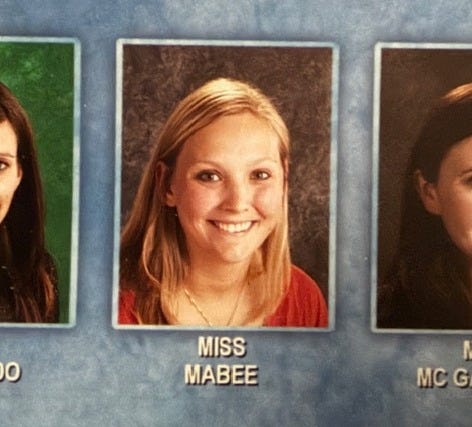
I wish I could go back to that version of Jo.
She was trying. She cared. She was learning how to lead a classroom full of actual children while barely feeling like an adult herself.
But I do wish I could ask her these two questions about that student. What do you want to believe about him? And what specific things are making that hard to believe right now?
She definitely would have cried, and then, maybe, she could have stopped confusing his behavior with the whole truth about who he was. Maybe she could have noticed that she had started giving him yesterday's residue instead of the possibility of today.
Maybe she could have seen that her work was not just getting him to follow directions. It was becoming the kind of adult who could still lead him well when belief got hard.
That is the work I am carrying into this summer.
The hope and the hesitation.
The conviction and the fatigue.
The belief we want to hold and the evidence that makes it hard.
Because our beliefs leak. And our kids deserve adults brave enough to notice what is leaking before we call it culture.
See you tonight, May 31 at 7 pm central for Burn the Script Live on TikTok. Week 7: The Danger of the “Backfire Effect” (Why Relief comes first)